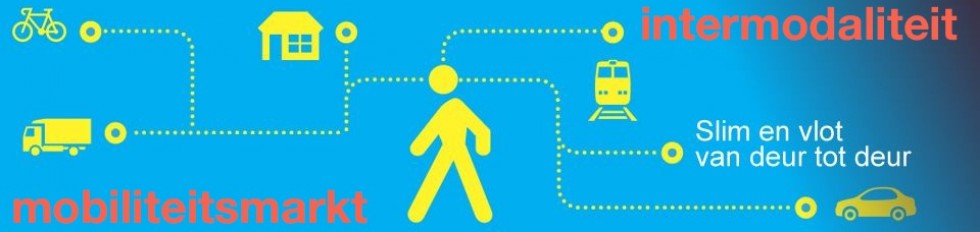
COMOBILITY.CO describes an important movement towards new “Mobility Management” in which competition no longer favors a particular mode. Rather, this new mobility framework could be used to increase the demand for multimodal transportation by linking new transportation business models and incentives (e.g., convenience and cost savings) with advanced technologies (e.g., cell phones and contactless smart cards that can facilitate intermodal transfers and payment). In the future, the integration of collective and private transportation modes could lead to energy savings and a more sustainable approach to mobility.
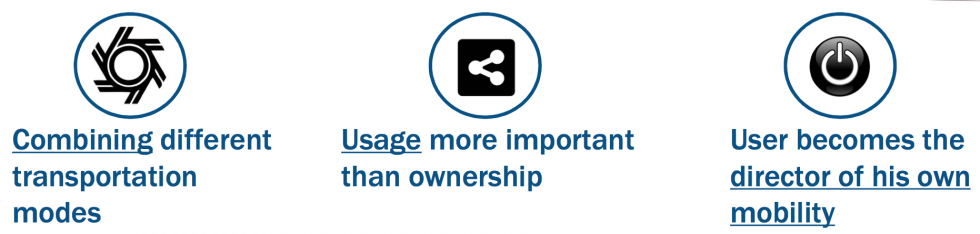
In this model, customers would construct a set of transportation tools to accomplish their mobility goals that reflect their individual set of mobility criteria, such as time and cost savings, convenience, and comfort. Mobility Management can be likened to a shopping center that offers its customers a range of mobility services and options. This form of “one-stop” transportation shopping can empower individuals by offering them a choice of modes that best fits their needs on a daily basis. On Monday, this might mean taking the train and a bike; car sharing on Tuesday; telecommuting Wednesday through Friday; and walking on weekends. Everyday is a new choice, depending on the needs and goals of the individual.
At present, advances in electronic and wireless communications are making innovations in transportation products and services possible. Due to these developments, as well as the congestion and air pollution associated with the automobile, the success of the personal vehicle may begin to diminish. In the future, personal vehicles are likely to play a significant role in transportation; however, their importance could shift. In contrast to their current status as a “dominant” mode, automobiles might be viewed as just one alternative among a wide range of attractive mobility options. With the same enthusiasm that planners invested in personal automobiles in the past, transportation planners and policymakers now have an opportunity to “reengineer” transportation into a diverse set of mobility services by employing advanced technologies.
E-mobility Connected cars Urban-City mobility Mobility services
contact: philippe.decrock@pandora.be


 comobility.co